
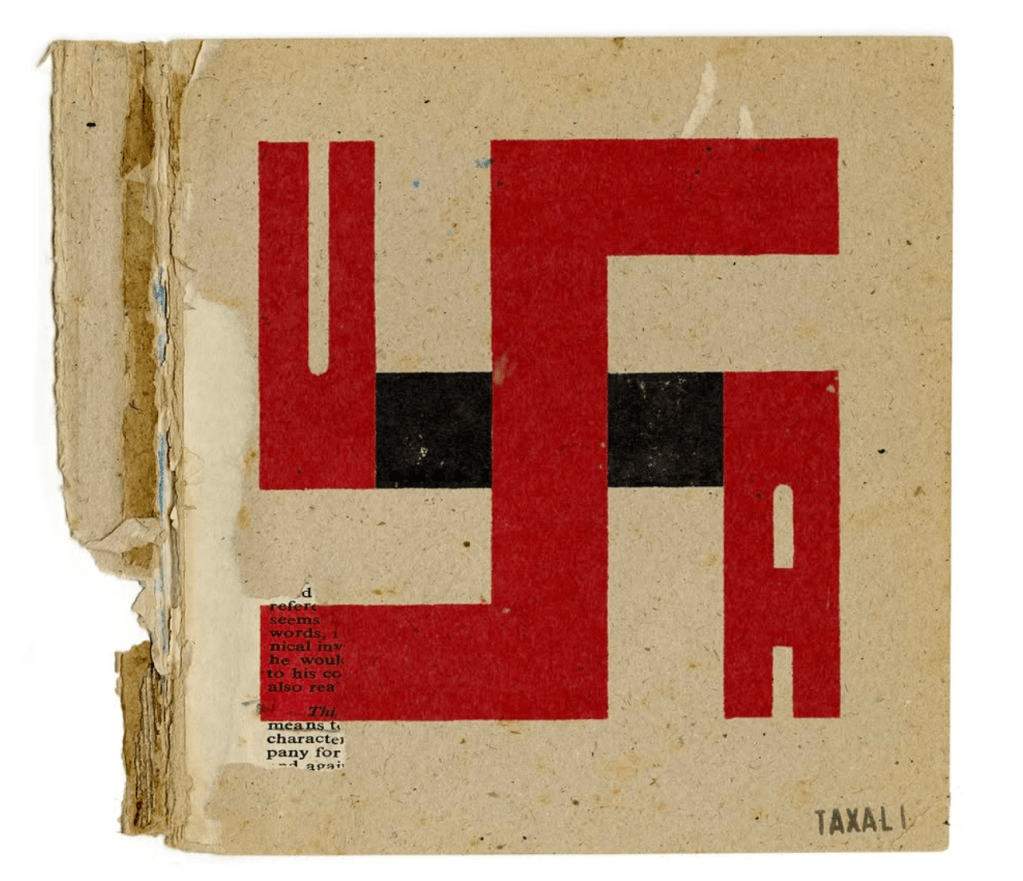
In the wake of yet another cold blooded murder of an innocent citizen on the streets of an American city, I wrote a letter to my Senator’s chief of staff about the need to abolish ICE (Immigration and Customs Enforcement), and hold the agency and specific individuals within said agency accountable for their deliberate brutality against civilians.
I started my letter with an analogy that I am familiar with, which is the rise of the Third Reich in Europe. As a Jewish American with family ties to Poland (Annopol), I’ve heard horrific personal stories about the Gestapo’s actions against Jews and other groups who they considered to be their enemy (including their political opponents, the Romani, people with disabilities and the LGBTQ community).
The parallels between how the Gestapo went door-to-door to conduct “identity checks” and today’s ethnic and racial profiling tactics by ICE are clear. Beginning in 1933, Jews in Germany were initially denaturalized, then completely stripped of their citizenship and disappeared to death camps or just simply executed on the streets. What has transpired in U.S. cities under the direction of the Department of Homeland Security (DHS) is markedly similar. In each case, the government provides an explanation for their violence that is at odds with eyewitness accounts, forensic evidence and common sense. This absurdist spin is reflective of a phrase from author George Orwell’s 1984, “The Party told you to reject the evidence of your eyes and ears. It was their final, most essential command.”
What we are experiencing, is what journalist M.Gessen explains is an era of “state terror,” where our own government “seeks to reduce us all to a state of constant fear — a fear of violence from which some people may at a given moment be spared, but from which no one will ever be truly safe.”
We can call what we are living under fascism, since we have fulfilled each phase of historian Robert Paxton’s “The Five Stages of Fascism.” But fascism is a modern European term (coined by Benito Mussolini in 1919), and as Paxton notes in his writing, it has been somewhat complex to universally define. This is because the phases that he describes can apply to regimes as disparate as Nazi Germany, Stalinist Russia and Imperial Japan.
Halfway through my letter, I took a break to browse social media (I know, not much of a break, especially for mental health) and saw an excerpt from the Harlem Renaissance poet Langston Hughes, which made me realize that I was looking at fascism strictly through a remote lens with Eurocentric blinders on. Despite some of my ancestors being persecuted under Hitler’s Nazi Germany, the concept of fascism to me, had always felt like something that happened in lands far away. After all, I have never even been to the places where my ancestors lived prior to their immigration to the United States.
Hughes’ words sent chills down my spine. It gave me the wherewithal to truly understand that fascism is not at all a foreign term, nor is it strictly related to Europe or even novel in twenty-first century American life. In 1937, when many Americans were just starting to learn about the atrocities happening in Nazi Germany, Hughes reminded us that what was happening there was not an unfamiliar concept stateside by noting that, “We Negroes in America do not have to be told what fascism is in action. We know. Its theories of Nordic supremacy and economic suppression have long been realities to us.”
Hitler appropriated American bigotry in his own quest for a racially pure white supremacist nation. In fact, a lot of what we deem as modern fascism has been appropriated from other cultures. The swastika, which is the most identifiable symbol of the Nazi movement, has also become the universal signifier of fascism; although it is actually an ancient symbol meaning “good fortune” in Sanskrit, and has been used for millennia in Hinduism, Buddhism and Jainism. The contrast between the swastika being used to express peace and prosperity for many in Asian cultures, and hate and destruction to cultures outside of Asia, is stark. This is why when discussing vocabulary and semiotics, it is useful to take into account that meaning hinges largely on context. Art and graphic design have been utilized as a means for sending messages to the collective culture by both fascist regimes and anti-fascist activists. Being fastidious and fluent in visual symbols and cultural traditions enables us to decipher propaganda and enhance our critical thinking.
With my realization that I was initially looking at the horrors of fascism through a microscopic lens, I returned to my letter and amended my words slightly. I thought it was essential to remind my Senator that fascism is not only an American institution, but that it was our treatment of enslaved Africans and the subsequent Jim Crow Laws that inspired Hitler’s own ideology. The Nazis, in part, bolstered their systematic brutality from studying chattel slavery and racial segregation in the United States. An early form of the United States’ organized law enforcement was the Southern “slave patrols,” which were established to manage enslaved populations. They were tasked with capturing runaway slaves and quashing slave rebellions. The kind of state terror we are experiencing today has been stitched into the fabric of our country since its foundation.
The Trump administration made it clear from the start that they planned to implement a revisionist redaction of any historical and cultural narratives that are critical of the United States. They have fulfilled their heavy-handed mission by censoring art exhibitions that highlight diversity, and have taken down historical plaques and markers that matter-of-factly describe slavery. In the recent instances of their state imposed terror, they are trying to tell us that what we see and know is not reality. Trump himself has exclaimed that, “what you’re seeing and what you’re reading is not what’s happening.”
They want us to reject our own common sense and sensory knowledge, and condemn us to accept the atrocities of past and recent history. Social activist Helen Keller once said that it is, “Better to be blind and see with your heart, than to have two good eyes and see nothing,” and we are at a precipice in time when this sentiment is being put to the test. This is a pivotal moment that requires ample avenues of mutual aid and peaceful displays of protest and radical empathy, which we are certainly seeing on a daily basis. But it is also important to remember that the stride for justice and reclamation will not simply end whenever the current flavor of fascism falls. In order to truly stop fascism from reappearing time and time again, a consolidated and thorough reconstruction needs to begin; and modes of disenfranchisement, including racial, gender and religious profiling need to unequivocally end.
Addendum:
This post was not initially intended to be published on Holocaust Remembrance Day, but it makes the message all the more pertinent. While reflecting the horrific historical account of the Nazi genocide of European Jews, we utter the phrase, “Never Again.” Of course words without action have very limited impact with regards to transformative change. Similar genocides have occurred in the aftermath of the Shoah, and antisemitism still runs rampant throughout the world. In order to dismantle systemic and structural persecution for one group of people, all forms of bigotry and oppression must be dismantled.
Discover more from Artfully Learning
Subscribe to get the latest posts sent to your email.
 Artfully Learning