
Speaking with my friends and colleagues working in the arts and education fields, I am well aware that imposter syndrome –which is anxious feelings and thoughts of being a failure, unsuccessful or unworthy of their positions– is commonplace; despite each of these individuals being high-performing and wonderful contributors to their craft. I too suffer from this condition from time-to-time. However I was lucky to endure a teachable moment wherein I developed the confidence to combat it. My mentor who motivated me to be a self-assured member of the arts community was Irving Kriesberg. He is the focus of today’s post in conjunction with my series of musings on Teacher Appreciation Week.

I met Irving in 2009 while I was a second year graduate student at the City College of New York on an art history and museums studies track. We ended up spending eight months together, which is the equivalent of a whole academic school year. This period of time is important to note because I consider Irving to be formative to my education and development in academia and the fine arts profession. We also became close friends, and I was able to coax information and expressions from him that no other critic or art historian had before. These results did not come about easily, but the journey was perhaps the most profound progression I have taken towards becoming the writer and scholar I am today.
The generational and experiential gap between us was initially intimidating. Irving was in his early-nineties with over six decades worth of making, exhibiting and teaching art, while I was in my mid-twenties with just a burgeoning exposure to the professional art world. I thought that because of this dichotomy I needed to maintain a certain, for lack of better words, conservative composure when we started our weekly meetings in his Greenwich Village art studio. So I based our early correspondence within a strictly academic context influenced by what I studied about modern art; particularly the aesthetic mode of Figurative Expressionism, a topic that has received very little recognition on the academic art history side, and one in which I realized could be my niche contribution as an emerging art historian.
My questions to Irving were constructed in terms of how I wanted to structure my thesis statement for school. It sounded like a regurgitation of the kind of intellectual art jargon I had picked up from my graduate work and from reading scholarly treatises on modern and postmodern art. My writing also reflected the rigid and impersonal tone common to the standards of traditional academic literature. Irving held nothing back. When I presented him with my first draft of a paper I wrote which analyzed his career narrative, he made it known that he was “appalled” by my writing. At first I took this rather harshly and was offended. I did not want to go back for our next session. But I knew Irving was right. Among the many edits and annotated remarks Irving made on my paper was a big bold phrase: “FIND YOUR VOICE.” In the seventeen years that I had been a student in school, no one had offered that suggestion to me with regards to the many research papers and persuasive essays I wrote and turned in. What Irving meant by demanding that I find my voice, was to be assertive and confident about the information that I was conveying. In other words, I should write like someone who knows their stuff and is emboldened to stand out from the sea of other art writers and academic scholars. After Irving’s notation and the subsequent pep talks, I developed my craft in a manner where it was apparent that I was taking ownership of my work and trusting my knowledge, skills and experience. Without his input and coaching, I would have continued writing bland art historical pieces.
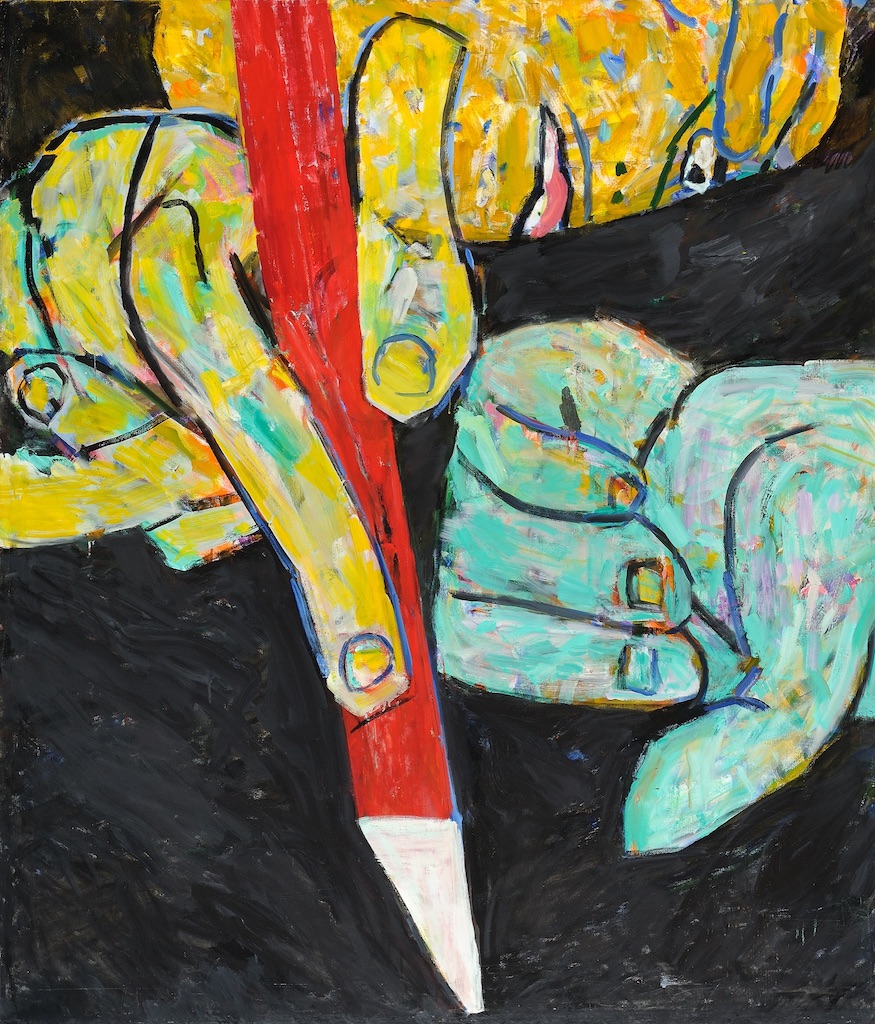
Irving changed my life in eight months. Thanks to his insightfully blunt motivational approach, I have been able to create my own path that acknowledges the lineage of art history and academic discourse, but is distinct to my voice as a scholar, arts worker and citizen of the world. The rewrite of my essay on Irving presented a strong argument about why his work is significant to me and how it has impacted art history. It earned me a Connor Award from City College’s graduate art history department; but the biggest accolade was from Irving who called me after receiving my revised paper in the mail. It was the first time that I heard the ninety-one year old raise his voice in a youthful demeanor to congratulate me on a job well done.
I had made Irving proud, but most importantly I made myself proud and aware that I could achieve what I previously considered outside of my purview, comfort level and ability. This meant that I had learned everything I needed to know from our short, but profound time together. He knew it too because while I had the pleasure of getting to know Irving Kriesberg during his final few months on this Earth, he was preparing me for a lifelong endeavor of taking risks, being assertive and positively advancing my way through whatever projects I set my sights on.
The last conversation we had is ingrained so vividly in my mind. We were supposed to meet in his studio for our usual session, but he was not feeling up for it when I arrived, so instead, Irving called me into his room where he lay resting in bed with a beret-like nightcap on his head. He perked up when I entered the room and presented me with another challenge, “CHANGE THE CANON!” he proclaimed. More than a decade later, I had the honor of honoring my mentor in an essay published in Raft magazine as part of their Open Canon series, and I have continued informing the public about his artwork and legacy through working with his estate. “Find your voice” reverberates inside my head every time I am writing something, and it is the first and foremost message that I communicate to others who I mentor as an artist’s coach, editor and educator.
Discover more from Artfully Learning
Subscribe to get the latest posts sent to your email.
 Artfully Learning
Thank you for this personal and insightful post. Weren’t you lucky to have Irving Kriesberg as a mentor and friend. His artwork is distinctive and interesting. Just what you’d expect from someone bold and assertive. Pleased that you found ‘your voice’.
LikeLiked by 1 person
Thank you! I am definitely grateful to have had time with Irving. Gleaning 60+ years of art world insight is not something everyone gets a chance to experience. Bold and assertive are definitely some of the best adjectives to describe Irving’s art. One critic mentioned that he was “swimming upstream against the currents of modernity.”
LikeLike