
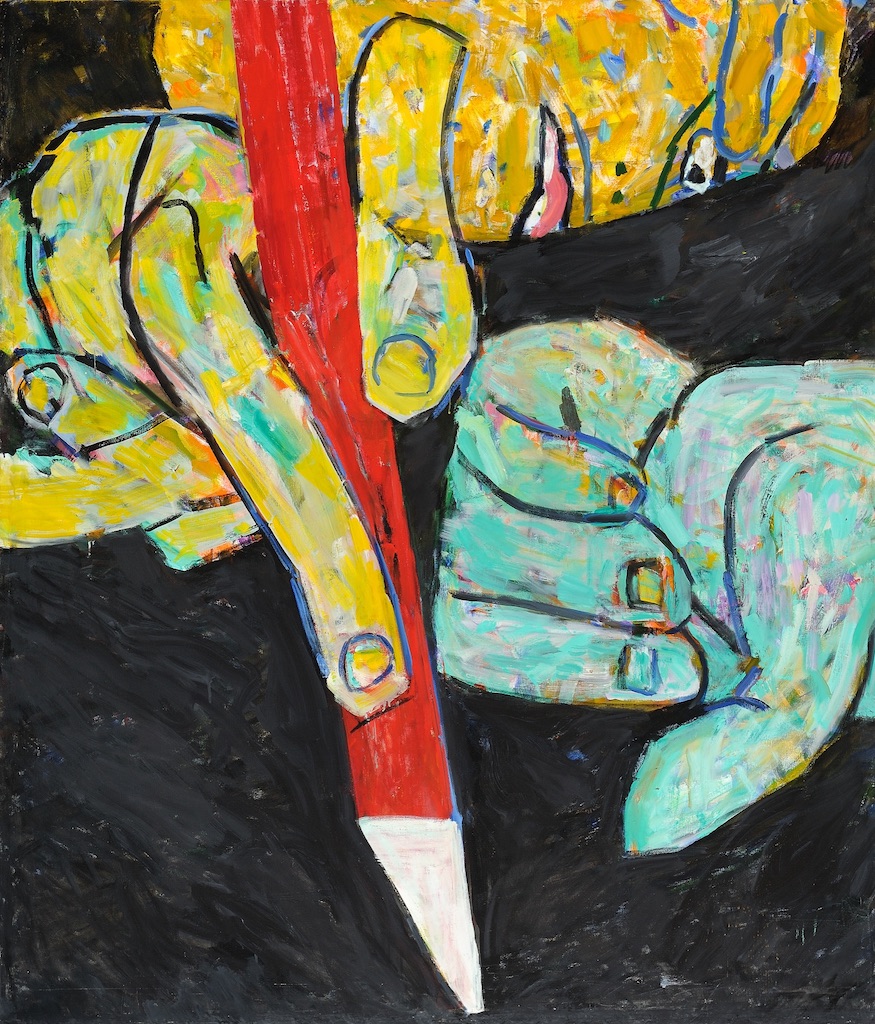
While the arts are still under significant threat from budgetary cuts, the curricula in both public K-12 schools and higher educational settings has progressed towards a crucially diverse and pluralistic overview of civilization in general. This change is exemplified in courses like art history, where prior pedagogical methods of rote memorization and a Eurocentric overview have progressed towards an inquiry-based approach that is more focused on critical analysis of content, context and diverse global narratives.
Through studying art history, we are introduced to ideas, customs and cultural identities that might differ from our own; and this enables us to become global citizens through developing understandings and appreciation for communities outside our own locale. A sense of cultural awareness makes events happening abroad feel less “foreign,” and therefore elicits more sensitive responses to current events in those regions.
It is evident that including art history throughout our educational journey is invaluable, but one thing that concerns me is the way art historical education shifts as we advance through the rungs of institutional learning. The main issue I have experienced from both the standpoint of a student and a teacher, is that discussing art becomes less of an emotional and experiential endeavor and more of an academic one. Rigorous standards for identifying and contextualizing works of art take the place of social and emotional outcomes.
I have become aware of how my own writing about art has followed this shift, because I am a product of the mechanization of academic art historical discourse. Paradoxically, the more educated in the arts I have become, the less personally profound my artistic engagement feels.
At the start of our art educational journey, there is a sole focus is on how we intrinsically see and respond to art. We are initially wholeheartedly concerned with the impact it has on our senses and emotions when we view it. This focus is always present in artistic learning, but it diminishes in precedence at a certain point in time, typically with the classification of art as a conveyor of content and context, which is evident in the structure of courses like high school level AP Art History and subsequent college art historical surveys.
We sometimes refer to overarching art historical courses as “art appreciation,” yet we are diminishing the emotional impact of art in favor of rigorous analysis and contextualization. Talking about how art makes us feel and why is just as important as discussing the period and background in which it was created. In an ideal course, lengthy and formulaic academic discourse would be supplemented with immediate and intuitive emotional reactions.
In 1966, Susan Sontag addressed the conundrum of art becoming formalized in her series of essays Against Interpretation. This was required reading for me in graduate school, which was also ironically when I was prompted to focus on interpretation and other factors for analyzing art. Sontag eschewed traditional criticism by arguing against reducing art to its content or meaning. Both of those elements are often the result of the critic, historian or other type of art world “authority” attempting to categorize works of art into a formulaic canon.
Content, context and meaning are important, but it is the social and emotional emphasis that arguably has the biggest influence on how we understand and engage with the world. Sontag asserts that, “Real art has the capacity to make us nervous. By reducing the work of art to its content and then interpreting that, one tames the work of art. Interpretation makes art manageable, conformable.”
When we focus on compartmentalizing or stretching a work of art’s meaning into a narrative that focuses on art specific jargon and academic interpretation, we are risking the removal of the artwork’s power to make us feel and see things deeply. In academia, we spend more time concerned with connecting art to a discipline specific lexicon and thematic issue than just letting ourselves experience it as a phenomena. In reality, that is not how most of the populace views art or how artists perceive their practice.
I have fallen into the pit of academia when visiting museums. It is especially evident if I am there with my wife, because she will tell me that I am being to analytical and not letting her take the work in. This is vital information, because it prompts me to refocus and work towards balancing critical evaluation with emotional expression. Rather than implying to people what they should be taking away from art, my aim is to leave the door open for an exploration of art’s subjectivity through a sensory, experiential and awe inspired discourse.
One of the great things about having a blog, is that it serves as a very accessible record for me to assess how my writing has developed over a period of time. Prior to starting graduate school, my writing followed a rather lackadaisical approach. If you told me I would have published essays in academic journals, written books and made a living editing other people’s writing, I would have scoffed. So I am very proud of my growth as a writer, but I also understand that being a writer means continually challenging myself to incorporate new techniques and perspectives for conveying the written word.
The biggest influence on my writing has been the late modern artist Irving Kriesberg. He was incredibly harsh when reading things I had written for him, and his tough critique was at first jarring, but later became the spark I needed in order to find my niche as an arts writer. I wrote about the effect that he had on my writing in a piece called How I Learned to Overcome Imposter Syndrome and Find my Voice, but the main gist that bears repeating is that Irving prompted me to “find my voice” by being more assertive and confident in what I sought to convey. Another element that I credit Irving with is reinforcing to me that not every element of art has to be explained, construed or translated for contextual meaning. Sometimes deeply observing what we see and how that makes us react in the moment, is more valuable than any amount words can expound upon.
Discover more from Artfully Learning
Subscribe to get the latest posts sent to your email.
 Artfully Learning