
Photographer Christopher Anderson has caused a maelstrom in the media and blogosphere with his Vanity Fair photographs of high ranking individuals within Donald Trump’s administration. Lots of people with a platform have been eager to weigh in, giving ample credence to the power visual culture has in shaping public discourse and influencing a variety of informative interpretations.
The way that Anderson composes a picture, especially his political portraits, are atypical of how depictions of powerful people are artistically rendered. Unlike some of the most renowned representations of leaders throughout Global art history (i.e. Augustus of Prima Porta or Bichitr’s portrait of Mughal Emperor Shah Jahan I), these are not flattering photographs.
Akin to how deliberate damage done to the faces of ancient Egyptian pharaohs (by political rivals) was designed to “deactivate” the statue’s inherent spiritual power; Anderson’s portraits of Trump’s administration are iconoclastic images that neuter the subject’s viability in governance. The best examples of this deactivation are the cropped close up portraits of each subject’s face and staged portraits of each figure in a specific room within the White House.
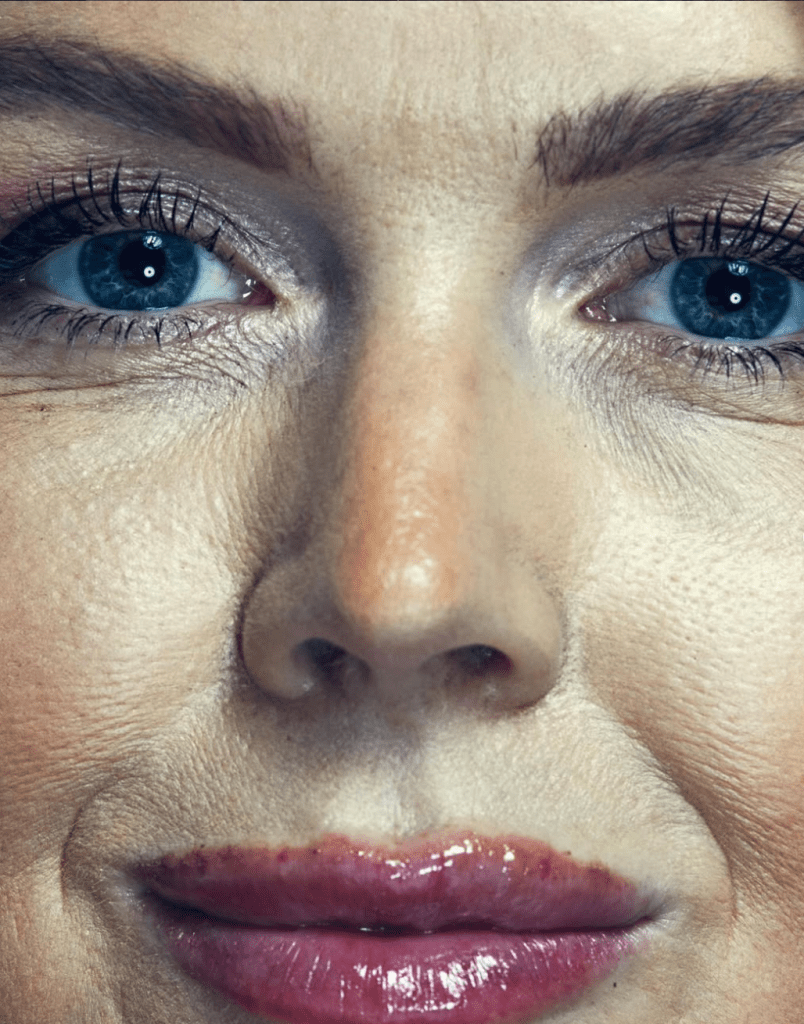
The close ups clearly reveal blotchy skin and other facial blemishes (such as Press Secretary Karoline Leavitt’s lip injection marks) and wide-eyed gazes that look both creepy and emotionally vacant.
Anderson’s framing of compositions that feature each subject inside of a room in the White House, give off an aura of powerlessness. Vice President J.D. Vance and Chief of Staff Susie Wiles appear diminutive against the surrounding backdrop, where minor accessories like light switches and outlets are juxtaposed with their face, and make the overall composition look flat and awkward. They are blending in with the office setting, symbolically being devoured and outmatched by the job they are tasked with.
Even the most traditional photograph in the series, which is of Leavitt, comes across as undignified and cheap. She’s wearing a red suit (a color that often makes objects feel smaller or more constrained in a composition) and rests her arm on a wingback chair that has a small American flag draped over it. She stands behind the chair rather than parallel or in front of it, furthering a sense being distant and diminutive. She looks like she’s taking a department store holiday photograph rather than being in a professional office.
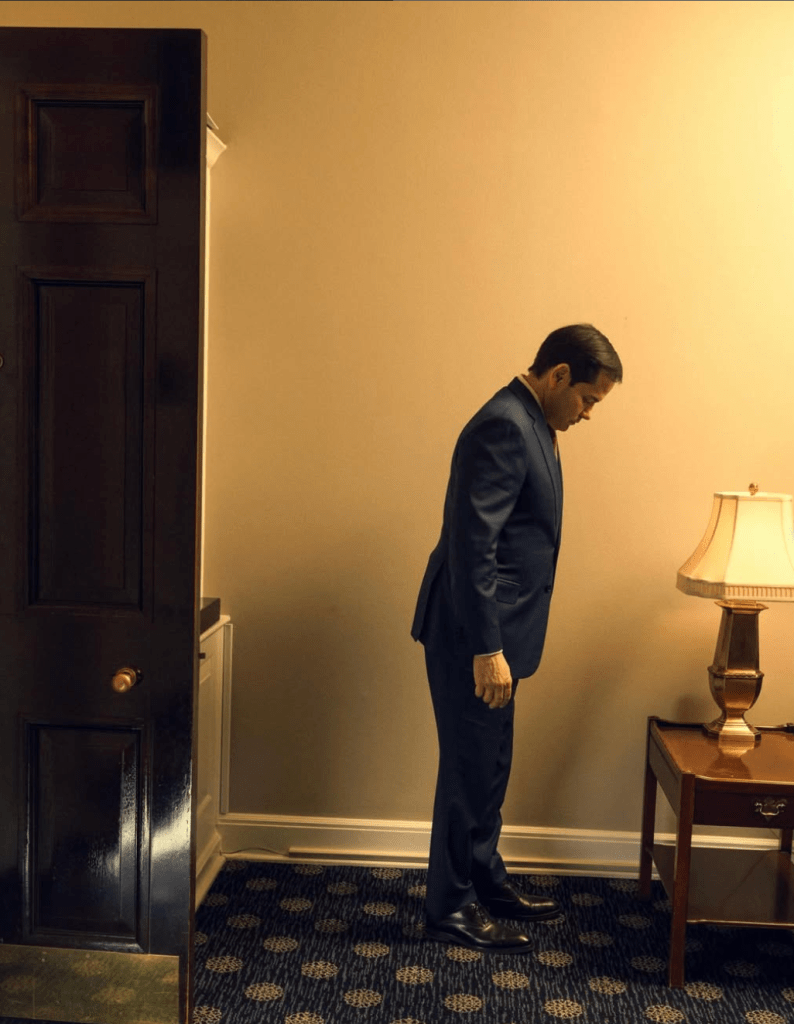
The most absurd image from the series is of Secretary of State Marco Rubio, who is portrayed from the side, subtly hunched over and staring into a table lamp as if he’s subservient to its dim and dull glow. With his awkward and obedient stance, the photograph brings to mind the nickname “Little Marco” that his former rival and current boss gave to him.
Anderson has revealed his process for the photography shoot. He sees these images as “penetrating the theater of politics.” This sounds paradoxical since they are stirring up dramatic response from people all across the political spectrum; but that has more to do with the bombastic and histrionic nature of contemporary politics than the images themselves.
Art is primarily a personal expression of the artist’s own experiences and beliefs, so it is hard to assume there is no personal motivation behind these photographs. Past Anderson portraits of political figures like Barack and Michelle Obama employ the same close up and unfiltered approach. However, there is a difference in the way those photographs look and feel compared to the most recent ones. While the close ups of the Obamas are unfiltered, they come across as personable, empathetic and playful compared to the stark, superficial and callous disposition of Trump’s staffers.
Historical portraiture of authoritarians typically exaggerate one or more aspects to present a flattering image of the sitter. Characteristics in commissioned portraits of Trump have been more outrageous due to the application of AI. We are experiencing the largest AI bubble in the digital age, and Trump and his faction of far-right influencers are unabashedly utilizing it to proliferate favorable propaganda and misinformation.
Anderson’s unfiltered approach is the antithesis to the AI slop which Trump’s administration has embraced. None of these photographs reflect honorable figures. These are individuals who are stripping away access to healthcare, dismantling civil rights, persecuting people based on race and gender and operating internment camps at home and abroad. Anderson’s portrayal does their cruel disregard for others justice.
Discover more from Artfully Learning
Subscribe to get the latest posts sent to your email.
 Artfully Learning