
The film Drylongso by visual artist Cauleen Smith, is a tale of two art educations; one via the traditional route of art school and the other through experiential learning influenced by the impact of race, gender and identity within an urban setting.
The film’s young protagonist is Pica Sullivan, an art student from West Oakland, California. She has a contentious relationship with school. Due to poor attendance, as well as the lack of proper tools and resources, she is at risk of failing out. Her professor tells her that she has promise, but that he is beholden to the curriculum and the college’s academic requirements. He also reminds her that she has only two weeks to create and present an art exhibition of her work in a gallery space. At this point, Pica has not yet begun to plan any type of conceptual presentation for her work. Pica is neither a bad student, nor is she an undedicated artist. In fact, art is a major part of her identity, and a way of seeking transformative change from the harsh realities of personal and communal life. She takes Polaroids of Black men on the streets as a way of documenting what she deems to be “an endangered species.” Some of the people she has photographed have since been killed.
The city streets are dangerous for both Black men and women due to a vicious cycle of domestic violence, police brutality and a serial slasher who has been targeting victims at random. Pica works a late night shift, wheatpasting posters for an activist organization. Her job puts her in the crosshairs of violence. Walking home after a shift, Pica meets Tobi, another young woman who has just been abused by her boyfriend. Pica helps Tobi escape the situation and return home safely. Some time later the two women have a fortuitous meeting at a bus stop. Thinking Tobi is a man, Pica asks to take her picture, but soon recognizes Tobi from their prior encounter. She learns that Tobi disguises herself as a man to protect herself from domestic violence.
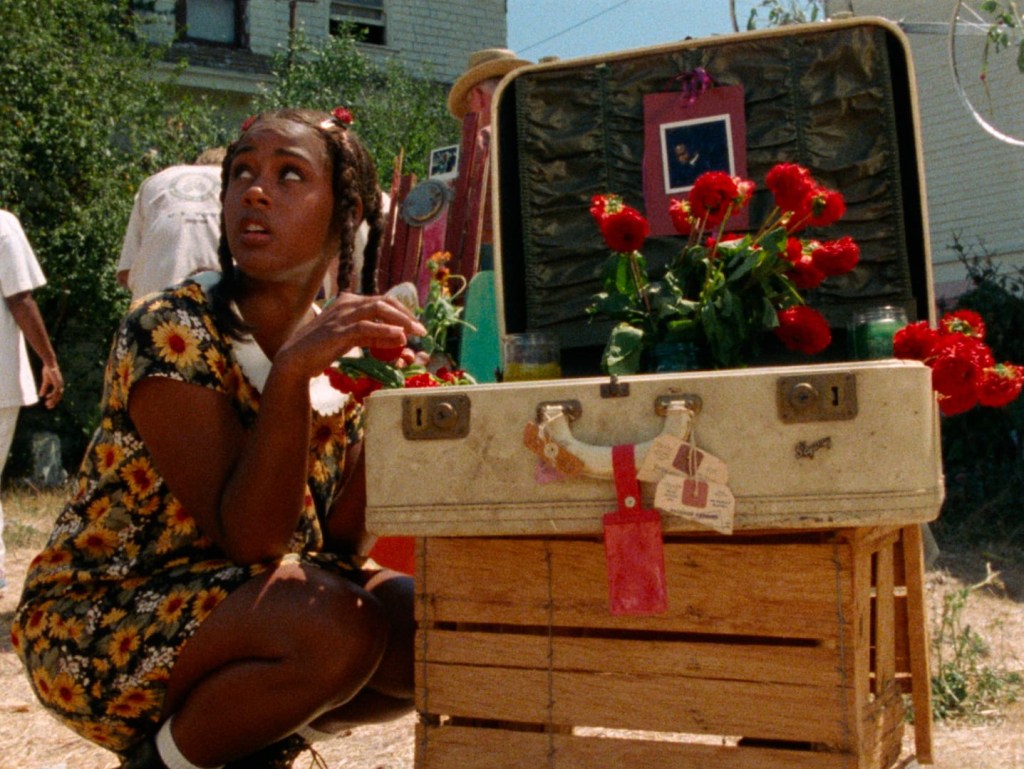
Pica and Tobi bond over their common concerns for the violence Black men and women have been experiencing in their community. Tobi also becomes a collaborative force in helping Pica manifest her final art project for school. Rather than showing her work in a gallery, Pica creates an installation, titled Evidence of Existence, in a grassy urban lot of found objects adorned with her Polaroid portraits. When she hands her professor an invitation to the opening event he is perplexed by the address because he does not recognize it as a formal gallery space. However her skeptical professor along with a particular naysayer in the community that was initially perturbed by the presence of artwork being installed in public, come around to understand the potent social transformation the installation embodies.
The artful presentation serves as a placemaking site for the community who is in need of a place to grieve the tragic losses of friends and family. By eschewing the traditional gallery setting Pica provides a public forum for discussing issues that the Black community faces on a daily basis. Bringing together the arts community with the community at large has a more potent consequence than the initial project called for. This is where the juxtaposition between traditional art education and experiential education based on social and cultural identity shines; and exemplifies the film’s impact as a coming of age tale through the lens of art and intersectional feminism. Her art school and urban art endeavors are each important and have a significant role in shaping Pica’s personal perspectives and development.
Drylongso is perhaps Cauleen Smith’s most approachable work as a visual artist and filmmaker. The film was released in 1998, but its theme and narrative is apropos to the current cultural climate, which is perhaps in part why it has been “rediscovered” and restored in a new digital format, available to stream via the Criterion Channel. At large, Smith’s practice investigates and expresses intergenerational issues that Black women have experienced in the past, are facing in the present and are likely to endure in the future. She weaves together elements from Black history and the canon of art history in a manner that envisions feminist utopias in celebration of Black identity and racial justice. The word drylongso is derived from the Gullah word for ordinary, but as you will hopefully take away from viewing the film, everyday life is full of extraordinary moments when it is imbued with art.
Discover more from Artfully Learning
Subscribe to get the latest posts sent to your email.
 Artfully Learning