
Jackson Heights is a bustling high density neighborhood in Queens, which is notable for having one of the most diverse communities in New York City (see: Bhaumik, 2016), and possibly even the world (Kimmelman, 2020).
In the middle of the neighborhood’s busiest intersections (between Broadway and Roosevelt Avenue), the city of New York created a large space for pedestrian use, called Diversity Plaza. The plaza is surrounded by Jackson Heights’ commercial strip, which is replete with restaurants, boutiques and other businesses run by entrepreneurs and workers from all over the world.
At any time of the day, Diversity Plaza feels like a global destination. Its paan stained pavement, paints a picture of daily life and leisure for many of the Southeast Asian residents. The smell of some of the city’s most delicious momos and birria tacos waft through the air, creating a fusion of cuisines that makes mouths water; while the cacophony of different dialects and languages spoken at any given time is a true and raw form of world music.
The many vibrant layers of Jackson Heights’ social and cultural diversity have inspired a work of art, which was on view at Diversity Plaza on October 31st and November 1st, and will be accessible in the nearby Travers Park from November 12th through the 14th. The installation, titled The Witness, by mixed-media artist, Derick Melander, is one of the artist’s signature sculptures made from second hand clothing and recycled wood. For this particular installation, Melander modified the artwork in coordination and collaboration with the local community. Anyone who passed by the sculpture was encouraged to participate in its transformation through a participatory activity facilitated by Melander.
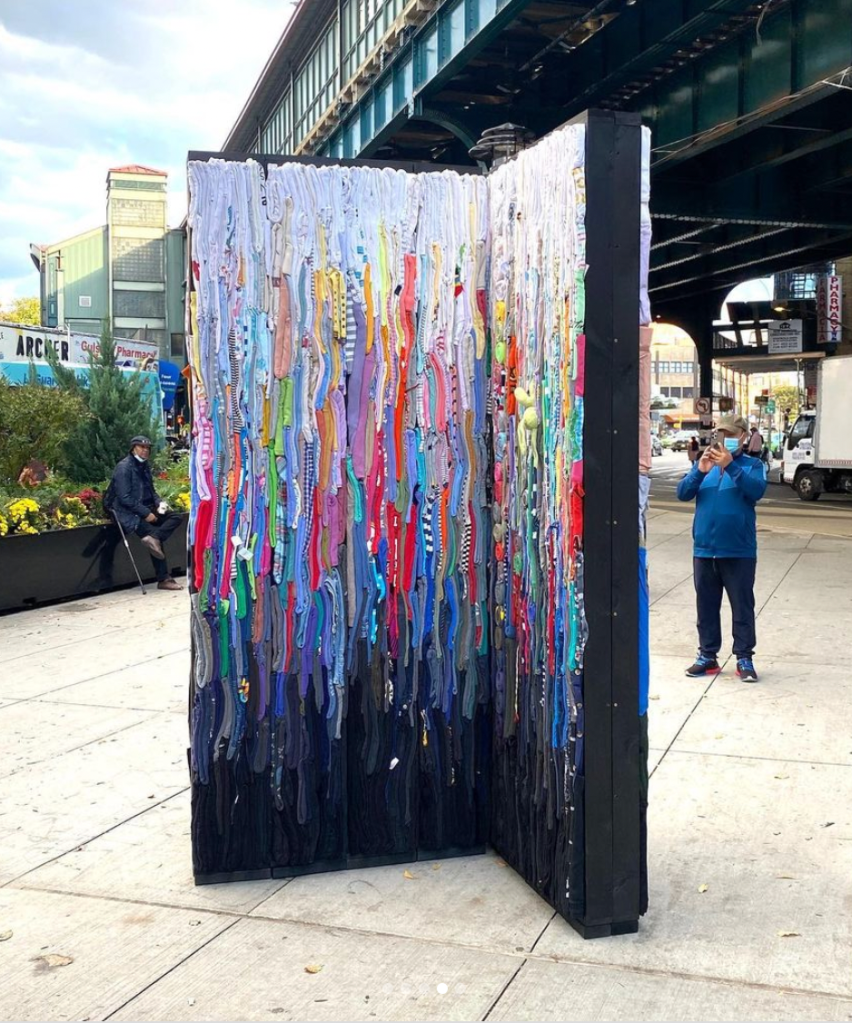
The Witness is a tribute to the people who live and work in New York City. For The Witness, Melander’s go-to materials, used clothing items, were sourced from the local community in Jackson Heights during the course of the COVID-19 pandemic. Textiles make both a tactile and visual impact in Melander’s artworks. The universality of clothing makes the work approachable. These are goals Melander has in mind for his work in the public sphere.
Melander’s hope is that The Witness will “engage with people from all walks of life and in particular, reach those who are underexposed to contemporary art. Perhaps commuters and passersby will see the work and become curious. Those who provide feedback may feel like they have influenced the work (and perhaps they will). I hope this approach will instill a sense of connection to the project and by extension, a sense of connection to Queens.”
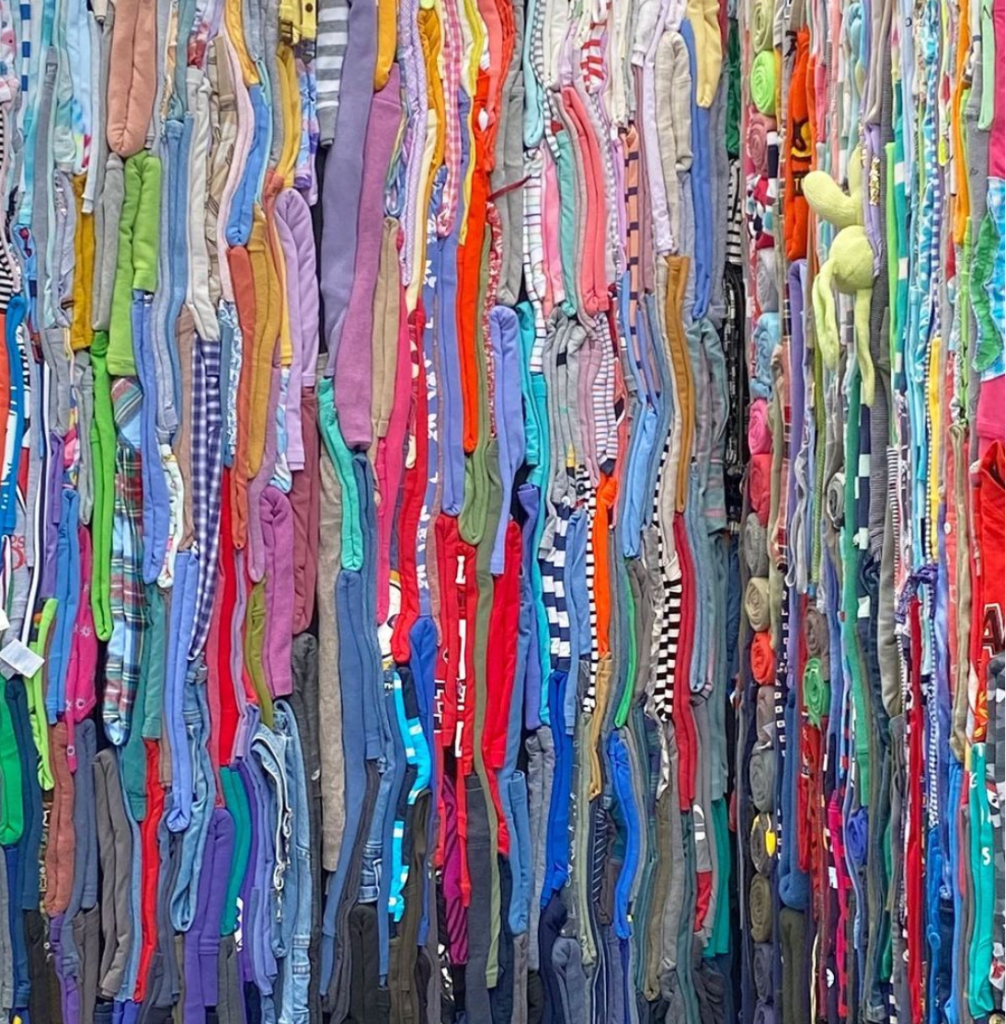
Art projects that embody multifaceted characteristics from a diverse group of people, are a valuable way to enhance our understanding and appreciation of collective culture and public spaces. There is so much to learn from the form and function of these works of art. Educators and students can look at works including The Witness, and find inspiration for their own collaborative art initiatives. Materials like clothing and textiles are easily sourced through donations by student’s families or local businesses; and can also be a way to share stories and anecdotes about personal and communal backgrounds and identities.
What does the fabric of your community look like? If you were to make a garment or artwork using textiles, what colors, forms and motifs would be most representative of the diversity of its social and cultural identity?
Clothing is all around us. It is both a physical necessity and a metaphor for human nature. Garments can tell stories and sew interpersonal connections, creating a vibrant and inclusive tapestry that is representative of the people, places and things that make our living spaces great.
References, Notes, Suggested Reading:
Bhaumik, Sanoja. “The New Face of Immigrant America: Welcome to Jackson Heights.” The Yale Politic, 6 September 2016. https://thepolitic.org/the-new-face-of-immigrant-america-welcome-to-jackson-heights/
Kimmelman, Michael. “Jackson Heights, Global Town Square.” The New York Times, 27 August 2020. https://www.nytimes.com/interactive/2020/08/27/arts/design/jackson-heights-queens-virtual-walk-tour.html
Tomaselli, Benedetta. “New sculpture installation in Jackson Heights to pay tribute the people of New York City.” QNS, 20 October 2021. https://qns.com/2021/10/new-sculpture-installation-in-jackson-heights-to-tribute-the-people-of-new-york-city/
Discover more from Artfully Learning
Subscribe to get the latest posts sent to your email.
 Artfully Learning
This is an amazing piece. I never would have thought of it.
LikeLiked by 1 person
Clothing and fabric are part of everyone’s life, and it great to see community artworks as you have described. I was in Cordova a couple of years back at Centro de Arte Contemporáneo, and was intrigued with a Yoko Ono exhibit, where viewers were encouraged to take fabrics from a box, and make ‘badges’ to stitch on clothes hanging on a rack alongside them.
LikeLiked by 1 person
Ah yes, Yoko Ono has done a few significant performances using fabric throughout her illustrious career! I love how her work is able to be recreated and re-presented wherever it’s show; and that it largely requires visitor interaction.
LikeLike